


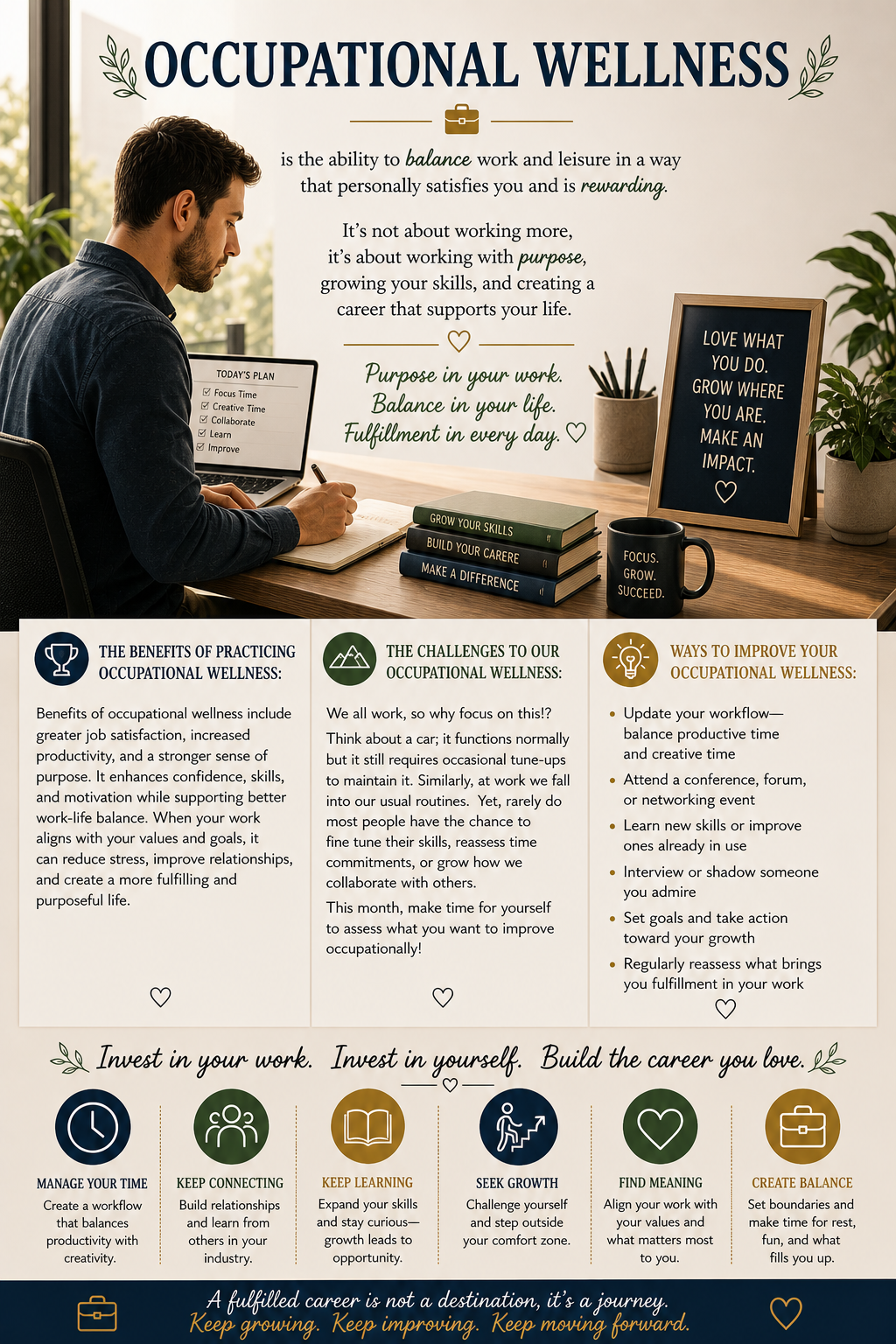
Occupational Wellness is the ability to balance work and leisure in a way that feels personally satisfying and rewarding. It involves finding purpose in your work, developing your skills, and creating a healthy relationship between your professional responsibilities and personal life. Occupational wellness does not mean loving every moment of your job, but rather feeling aligned, fulfilled, and supported in the work you do.
The Benefits of Practicing Occupational Wellness
Benefits of occupational wellness include increased job satisfaction, improved productivity, and a greater sense of purpose. It enhances motivation, confidence, and overall well-being, while also supporting better work-life balance. When you feel fulfilled and aligned in your work, it can reduce stress, improve relationships, and create a stronger sense of direction in your life. Prioritizing occupational wellness fosters both personal and professional growth.
The Challenges to Our Occupational Wellness
Occupational wellness can be challenged by routine, burnout, lack of growth opportunities, or feeling disconnected from your work. Over time, it’s easy to fall into patterns where you simply go through the motions without reassessing your goals, skills, or satisfaction. Work demands, time constraints, and limited opportunities for development can make it difficult to prioritize growth.
Think about a car—it may function normally, but it still requires regular tune-ups to perform at its best. The same applies to your work life. Without intentional check-ins, it’s easy to stay in the same routines without refining your skills, improving how you manage your time, or evolving how you collaborate with others.
To manage these challenges, it’s important to take time to reflect on your work experience, identify areas for growth, and make small, intentional improvements. Creating space to reassess your goals and explore new opportunities can help you feel more engaged, motivated, and fulfilled in your career.
Think about a car—it may function normally, but it still requires regular tune-ups to perform at its best. The same applies to your work life. Without intentional check-ins, it’s easy to stay in the same routines without refining your skills, improving how you manage your time, or evolving how you collaborate with others.
To manage these challenges, it’s important to take time to reflect on your work experience, identify areas for growth, and make small, intentional improvements. Creating space to reassess your goals and explore new opportunities can help you feel more engaged, motivated, and fulfilled in your career.
Ways to Practice Occupational Wellness
- Updating your workflow to better balance productive time and creative time
- Attending conferences, forums, or networking events to expand your perspective
- Learning new skills or strengthening the ones you already use
- Interviewing or shadowing someone you admire to gain insight and inspiration
- Setting boundaries to support a healthy work-life balance
- Taking time to reflect on your goals and how your work aligns with them
Webinar
Developing Leadership Skills

About our Speaker
Michelle Williams

Michelle Williams is the owner of Wishing Well Works, a corporate wellness company local to Tampa Bay. She has a graduate degree in human behaviors and has been working as a health educator for almost 20 years and has a team of GURUs that offer classes to businesses all over the Tampa Bay and New England areas.
Video Resources


PDF Resources
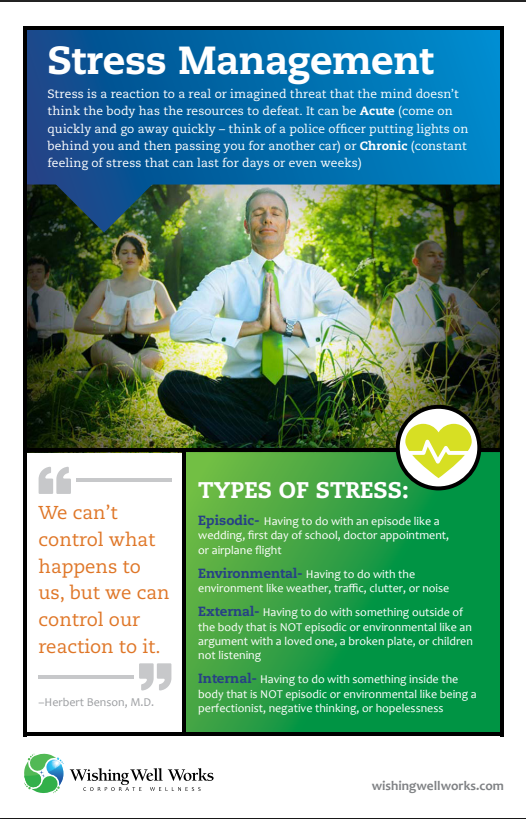
Stress Management
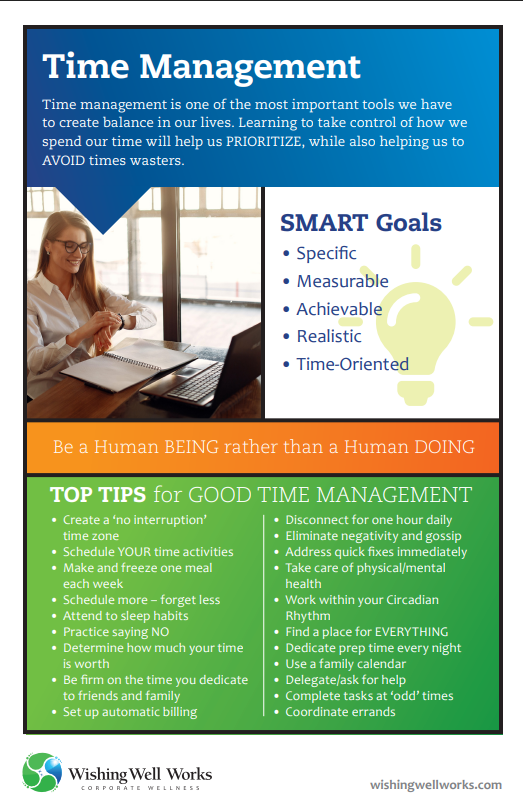
Time Management
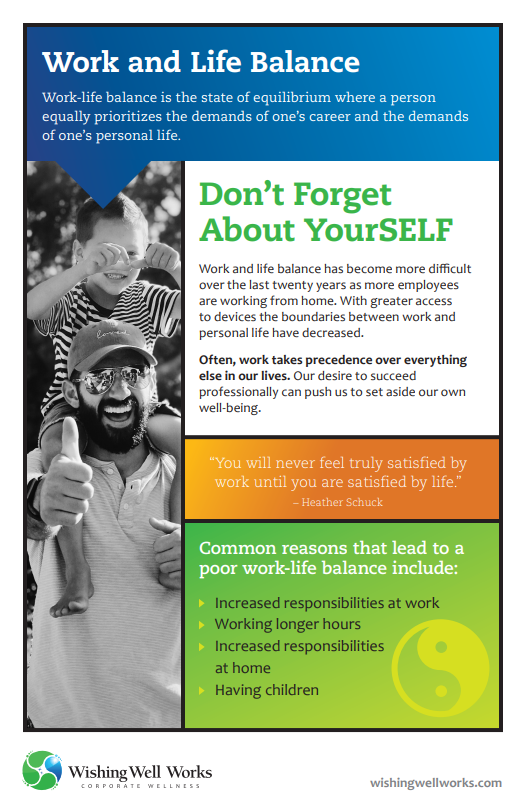
Work Life Balance